Blog

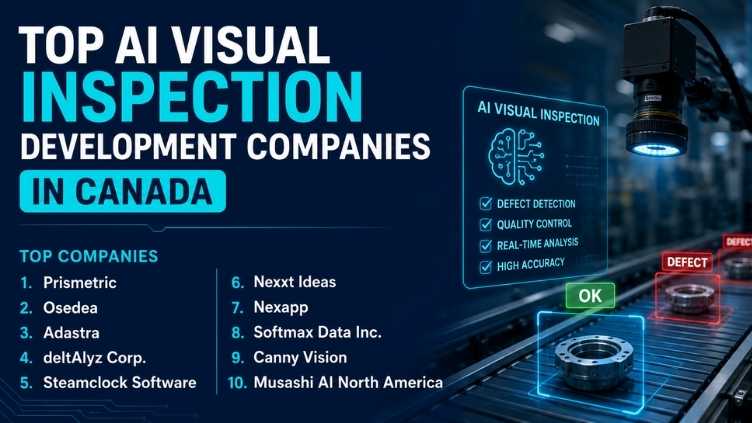
  • Top AI Visual Inspection Development Companies in Canada

    Top AI Visual Inspection Development Companies in Canada

    AI visual inspection is becoming a practical choice for Canadian manufacturers that want faster, more accurate quality checks. Instead of depending only on manual inspection, businesses can use computer vision, machine learning, cameras, and real-time defect detection systems to spot cracks, scratches, missing parts, packaging errors, and product defects before they reach customers.

    For industries like automotive, aerospace, food processing, logistics, and heavy manufacturing, even a small quality issue can lead to delays, recalls, waste, or unhappy buyers. That’s why many companies now look for reliable AI visual inspection development companies in Canada that can build custom inspection systems around their production lines, camera setup, and quality control needs.

    In this guide, we’ll look at the top companies, what they offer, how to compare them, and how to choose the right AI visual inspection partner for your business.

    How We Selected the Best AI Visual Inspection Development Companies in Canada

    To build this list, we looked beyond basic company profiles. AI visual inspection needs more than general software skills, so we focused on companies that can understand real production problems and turn them into practical inspection systems.

    • Computer vision expertise: We checked whether the company works with image recognition, object detection, anomaly detection, video analytics, and machine learning models.
    • AI model development experience: We gave preference to companies that can train custom models to detect defects like cracks, dents, scratches, missing parts, label errors, and packaging issues.
    • Industry understanding: We looked for teams with experience in manufacturing, automotive, aerospace, food processing, logistics, heavy industry, or quality control workflows.
    • Custom development capability: Ready-made tools don’t fit every factory floor. So, we focused on companies that can build AI visual inspection software around specific products, defect types, camera setups, and inspection rules.
    • Integration skills: A good inspection system should connect with cameras, sensors, PLCs, MES, ERP, dashboards, and reporting tools. Companies with strong integration experience scored better.
    • Edge AI and cloud deployment: Some businesses need real-time inspection on the production line, while others need cloud-based monitoring. We considered companies that can support both deployment models.
    • Data handling and model accuracy: We reviewed how well each company can manage image datasets, improve model accuracy, reduce false positives, and support continuous model training after launch.
    • Client trust and delivery record: We also considered client reviews, project portfolio, market reputation, technical strength, and the ability to support businesses after deployment.

    Top AI Visual Inspection Development Companies in Canada

    Choosing the right AI visual inspection development company can make a big difference in how well your inspection system performs on the production floor. The best partners don’t just build AI models. They understand cameras, data, defect patterns, workflow gaps, and the real pressure quality teams face every day.

    1. Prismetric

    Best for: Custom AI visual inspection software, computer vision solutions, defect detection systems, and production-ready AI quality inspection platforms.

    Short overview:Prismetric is a strong choice for businesses that need a custom AI visual inspection system built around their exact quality control process. The company helps manufacturers, logistics teams, food processing units, automotive suppliers, and industrial businesses use AI to detect defects faster and reduce manual inspection work.

    Instead of forcing a ready-made tool into your workflow, Prismetric can build a solution that matches your products, camera setup, defect types, and reporting needs. That makes it useful for businesses dealing with unique inspection challenges, such as surface cracks, wrong assembly, label errors, missing components, packaging damage, or product size variation.

    Key services:

    • AI visual inspection software development
    • Computer vision solution development
    • AI defect detection system development
    • Image recognition and object detection models
    • Machine learning model training
    • Anomaly detection for quality control
    • Camera and sensor integration
    • Edge AI and cloud-based inspection systems
    • Real-time inspection dashboard development
    • ERP, MES, and production system integration
    • AI consulting for manufacturing and industrial automation

    Why choose Prismetric:Choose Prismetric if you want more than a basic inspection tool. The team can help you move from idea to proof of concept, then to a working AI inspection system that fits your production line. For Canadian businesses, this matters because every factory, warehouse, and processing unit has different quality rules.

    Prismetric also works well for companies that need flexibility. Whether you want to start with one defect detection use case or build a complete automated visual inspection system across multiple lines, Prismetric can shape the solution around your long-term goals.

    2. Osedea

    Best for: Custom AI software, computer vision applications, and smart digital products for growing businesses.

    Short overview:Osedea is a Canada-based software development company that works with businesses on custom digital products, AI solutions, and modern software systems. For AI visual inspection, the company can be a good fit for businesses that need computer vision features added to an existing platform, dashboard, or workflow.

    Key services:

    • Custom AI software development
    • Computer vision development
    • Machine learning solutions
    • Data-driven application development
    • Product strategy and UX design
    • Web and mobile app development
    • Cloud software development
    • AI workflow automation

    Why choose Osedea:Choose Osedea if you want a design-minded technology partner that can build user-friendly AI inspection tools, not just backend models. Their strength fits companies that need clean dashboards, easy review flows, and custom software around visual quality inspection.

    3. Adastra

    Best for: Data, AI, analytics, cloud solutions, and enterprise-grade computer vision systems.

    Short overview:Adastra is known for data, analytics, AI, and cloud consulting. For larger Canadian businesses, it can support AI visual inspection projects where image data, production data, reporting, and enterprise systems need to work together. This makes it useful for companies that want inspection insights connected with broader business intelligence.

    Key services:

    • AI and machine learning development
    • Computer vision consulting
    • Data engineering
    • Cloud data platforms
    • Advanced analytics
    • Business intelligence dashboards
    • Data integration
    • Enterprise AI consulting

    Why choose Adastra:Choose Adastra if your AI visual inspection project depends heavily on data pipelines, analytics, and enterprise system integration. They’re a good fit when inspection results need to feed into dashboards, reports, quality metrics, and long-term operational planning.

    4. deltAlyz Corp.

    Best for: Business automation, analytics, AI solutions, and workflow-focused inspection systems.

    Short overview:deltAlyz Corp. helps businesses improve operations with automation, data analytics, software development, and AI-based solutions. For AI visual inspection, the company can help teams build systems that connect defect detection with reports, alerts, internal workflows, and decision-making tools.

    Key services:

    • AI and automation solutions
    • Custom software development
    • Data analytics and dashboards
    • Business intelligence
    • Workflow automation
    • Cloud application development
    • System integration
    • Process optimization

    Why choose deltAlyz Corp.:Choose deltAlyz Corp. if you want AI visual inspection to support daily operations, not stay limited to defect detection. They’re a strong fit for businesses that need inspection data connected with team alerts, reporting dashboards, and process improvement workflows.

    5. Steamclock Software

    Best for: Custom mobile and web applications with AI-powered visual features.

    Short overview:Steamclock Software is a Canadian development company known for building polished mobile and web apps. For AI visual inspection projects, they can be a good fit when a business needs inspection results displayed through a clean app, review dashboard, field tool, or internal quality control interface.

    Key services:

    • Custom mobile app development
    • Web app development
    • AI-enabled app features
    • Product design
    • UX and UI design
    • Cloud-connected applications
    • Internal business tools
    • Software consulting

    Why choose Steamclock Software:Choose Steamclock Software if your AI visual inspection system needs a strong user experience. They’re a good match for companies that want inspectors, managers, or field teams to review defect images, approve flagged items, and track quality issues through a simple app.

    6. Nexxt Ideas

    Best for: AI product development, custom software, and startup-friendly AI solutions.

    Short overview:Nexxt Ideas works with businesses on AI products, custom software, and digital platforms. For AI visual inspection, the company can support early-stage projects where a business wants to test defect detection, build a proof of concept, or turn a manual inspection process into a smarter digital workflow.

    Key services:

    • AI software development
    • Machine learning solutions
    • Custom software development
    • MVP development
    • Product strategy
    • Web and mobile app development
    • Data-driven applications
    • Automation solutions

    Why choose Nexxt Ideas:Choose Nexxt Ideas if you want to start small and validate your AI visual inspection idea before making a larger investment. They’re a useful fit for companies that need a proof of concept, MVP, or pilot system for one product line or inspection use case.

    7. Nexapp

    Best for: Custom software, cloud platforms, and scalable AI-enabled business systems.

    Short overview:Nexapp is a Canadian software development company that builds custom digital products, cloud systems, and business platforms. For AI visual inspection, they can help companies create inspection software that connects image analysis with dashboards, production data, alerts, and internal systems.

    Key services:

    • Custom software development
    • AI and data-driven solutions
    • Cloud application development
    • Web and mobile development
    • Software architecture
    • System integration
    • Product development
    • DevOps and support

    Why choose Nexapp:Choose Nexapp if you need an AI visual inspection system that can scale with your operations. They’re a good fit for businesses that want to connect inspection results with cloud dashboards, internal tools, and long-term software infrastructure.

    8. Softmax Data Inc.

    Best for: AI consulting, machine learning, data analytics, and computer vision-based business solutions.

    Short overview:Softmax Data Inc. works with businesses on AI, machine learning, data engineering, and analytics projects. For AI visual inspection, the company can help teams use image data to detect quality issues, classify defects, and build reporting systems that support better inspection decisions.

    Key services:

    • AI and machine learning development
    • Computer vision solutions
    • Data analytics
    • Predictive analytics
    • Custom software development
    • Cloud data solutions
    • Business intelligence dashboards
    • AI consulting

    Why choose Softmax Data Inc.:Choose Softmax Data Inc. if your inspection project depends on data quality, model training, and analytics. They’re a good fit for companies that want to turn inspection images into useful insights, reports, and quality trends.

    9. Canny Vision

    Best for: Computer vision, image recognition, and AI-powered visual analysis solutions.

    Short overview:Canny Vision focuses on visual AI and computer vision solutions, which makes it relevant for businesses exploring automated visual inspection. The company can support projects where machines need to identify objects, detect visual differences, read images, or flag defects from photos and video feeds.

    Key services:

    • Computer vision development
    • Image recognition
    • Object detection
    • Visual AI solutions
    • Machine learning model development
    • Video and image analysis
    • AI-based defect detection
    • Custom computer vision consulting

    Why choose Canny Vision:Choose Canny Vision if your main need is deep computer vision expertise. They’re a suitable option for companies that want focused support around image analysis, object detection, defect classification, and visual AI model development.

    10. Musashi AI North America

    Best for: Industrial AI inspection, manufacturing automation, and production-line quality control.

    Short overview:Musashi AI North America focuses on AI-powered inspection and automation for manufacturing environments. Its solutions are especially relevant for production teams that need automated defect detection, quality checks, and real-time inspection support on factory lines.

    Key services:

    • AI visual inspection systems
    • Industrial automation
    • Manufacturing quality inspection
    • Defect detection
    • Production-line inspection
    • Computer vision for factories
    • Real-time quality monitoring
    • AI inspection hardware and software solutions

    Why choose Musashi AI North America:Choose Musashi AI North America if you need an inspection partner with a strong manufacturing focus. They’re a good fit for companies that want AI visual inspection tied closely to production lines, automation workflows, and factory quality control.

    How to Choose the Right AI Visual Inspection Development Partner in Canada

    • Choose a custom AI development company if your inspection needs are unique. If your defects are hard to spot, product-specific, or different from standard inspection cases, a custom partner can train models around your real images, production rules, and quality standards.
    • Choose a computer vision specialist if image accuracy is your biggest concern. If you need to detect tiny cracks, scratches, missing parts, dents, stains, or surface defects, look for a team with strong experience in object detection, image segmentation, anomaly detection, and model tuning.
    • Choose an industrial automation partner if your system must work on the factory floor. This is important when your AI visual inspection system needs to connect with cameras, sensors, PLCs, robotics, conveyor belts, MES, or existing production equipment.
    • Choose a data-focused company if you want deeper quality insights. Some businesses don’t just want pass-or-fail results. They want defect trends, production reports, batch-level insights, and dashboards that help managers improve quality over time.
    • Choose an edge AI partner if you need real-time inspection. If your production line moves fast, cloud processing may not be enough. In that case, pick a company that can run AI models on edge devices near the camera for faster decisions.
    • Choose a cloud AI partner if you manage multiple locations. Cloud-based visual inspection works well when you need centralized monitoring, remote dashboards, quality reports, and inspection data from different plants or warehouses.
    • Choose a partner with strong integration skills if you already use ERP, MES, or quality systems. Your inspection software should not work in isolation. It should send alerts, update records, create reports, and support your existing workflow.
    • Choose a proof-of-concept-first partner if you’re still testing the idea. A small pilot can help you check model accuracy, camera placement, defect visibility, and business value before you invest in a full AI visual inspection system.
    • Choose a long-term support partner if the model needs to improve over time. Defect patterns change, lighting conditions shift, and new products enter the line. A good development company should help you retrain, monitor, and improve the system after launch.
    • Choose Prismetric if you need a flexible AI visual inspection partner. Prismetric is a good fit for businesses that want custom AI inspection software, computer vision models, dashboards, camera integration, and scalable development support in one place.

    Final Verdict

    AI visual inspection can help Canadian businesses catch defects earlier, reduce manual checking, and improve product quality without slowing down production. But the real value depends on the partner you choose. A basic tool may work for simple inspection needs, but custom defect detection, camera integration, dashboards, and factory system connectivity need a team that understands both AI and real business workflows.

    Prismetric is a strong choice for companies that want a custom AI visual inspection system built around their products, defect types, and quality control process. Whether you’re starting with a proof of concept or planning a full production-grade inspection platform, the right development partner can help you move from manual checks to smarter, faster, and more reliable quality inspection.
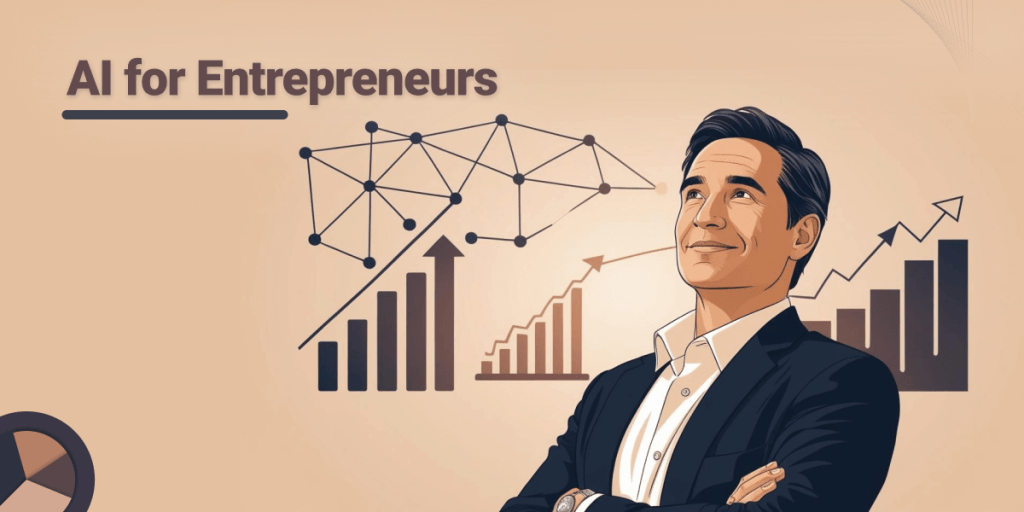

  • AI for entrepreneurs: How AI is changing entrepreneurship in USA

    AI for entrepreneurs: How AI is changing entrepreneurship in USA

    Artificial Intelligence (AI) is no longer a futuristic concept reserved for research labs or large corporations, it is now an essential driver of innovation and efficiency in the entrepreneurial world. Across the United States, a new wave of startups and small businesses are tapping into AI to unlock smarter, faster, and more cost-effective ways to run their operations. What was once accessible only to tech giants is now within reach of solo founders and small teams thanks to open-source tools, cloud computing, and user-friendly AI platforms.

    The American entrepreneurial ecosystem is experiencing a significant shift. AI technologies are transforming everything from how business ideas are born to how companies deliver products, acquire customers, and manage internal processes. With tools that can analyze data, automate tasks, personalize user experiences, and even predict market trends, AI is enabling entrepreneurs to compete at higher levels, often with fewer resources.

    This transformation is not only creating new opportunities but also redefining what it means to be an entrepreneur in the 21st century. No longer limited by geography, technical skill, or traditional funding avenues, today’s entrepreneurs can launch and scale businesses in ways that were unimaginable just a decade ago. And at the heart of this evolution lies AI, a force that is reshaping the rules of the game.

    In this article, we’ll explore how AI is fundamentally changing entrepreneurship in the United States. From accelerating product development to enabling hyper-personalized customer engagement, we’ll delve into the practical ways AI is driving success for startups. We’ll also address the challenges and ethical responsibilities that come with adopting these powerful technologies. Whether you’re a founder, investor, or aspiring entrepreneur, understanding AI’s role in modern business is no longer optional, it’s essential.

    AI as a Catalyst for Innovation

    Innovation has always been the lifeblood of entrepreneurship. The ability to develop fresh ideas and bring them to life faster than the competition often determines who thrives in a crowded market. AI is now taking this dynamic to a whole new level. By streamlining creative processes and reducing the time needed to prototype, test, and launch new products, AI is positioning itself as the ultimate innovation partner for modern entrepreneurs.

    Idea Generation and Product Development

    Coming up with a viable business idea can be one of the most challenging parts of launching a venture. Traditionally, this required market research, brainstorming sessions, and guesswork. But today, AI tools like generative language models, trend analysis platforms, and consumer behavior prediction software are radically simplifying this process.

    • AI-Powered Brainstorming: Tools like ChatGPT, Jasper, and Copy.ai allow founders to generate names, slogans, product descriptions, and even entire business concepts in minutes. These tools help overcome creative blocks and explore a wide range of options quickly.
    • Customer-Centric Design: AI can analyze customer feedback, social media comments, and product reviews to help entrepreneurs understand pain points and preferences. This data is then used to develop products that are more aligned with market needs.
    • Visual Prototyping: AI platforms like Midjourney and DALL·E can create realistic visual concepts, app wireframes, or branding mockups, reducing the reliance on professional designers in the early stages.

    By minimizing the trial-and-error phase and amplifying creative capabilities, AI enables entrepreneurs to move from idea to implementation faster, while also improving the quality and relevance of their products.

    Accelerating Time-to-Market

    In the fast-paced startup world, timing is everything. The sooner a business can test, iterate, and release a product, the greater its chances of success. AI significantly reduces the time required to go from concept to launch by automating repetitive tasks, enabling data-driven iterations, and allowing real-time adjustments.

    • Rapid Prototyping: Entrepreneurs can use AI tools to develop MVPs (minimum viable products) with minimal coding. Platforms like Bubble, Builder.ai, and UIzard allow for drag-and-drop development augmented by AI suggestions and code generation.
    • Market Readiness Analysis: Predictive algorithms can assess when a product is market-ready by evaluating feedback, usage patterns, and engagement metrics. This helps reduce wasted resources and avoid premature launches.
    • Agile Scaling: Once launched, AI tools like AWS Machine Learning and Google Cloud AI allow startups to scale infrastructure on-demand, meeting customer needs without massive upfront investment.

    Time-to-market is no longer a bottleneck for those who embrace AI. By speeding up every phase of product development, from ideation to deployment, AI gives entrepreneurs a vital edge in today’s competitive environment.

    Enhancing Operational Efficiency

    Running a business involves countless repetitive and time-consuming tasks, tasks that often take founders away from high-value activities like product development or strategic planning. AI is changing that equation by automating routine workflows and optimizing how resources are used. For entrepreneurs in the U.S., this means leaner operations, lower overhead, and more time to focus on growth.

    Automation of Routine Tasks

    One of AI’s most practical benefits lies in its ability to handle repetitive tasks with speed and accuracy. What used to require a dedicated employee, or hours of manual effort, can now be completed in seconds by an AI system.

    • Administrative Automation: Tools like Zapier, UiPath, and Microsoft Power Automate integrate with everyday software to automate invoice generation, appointment scheduling, payroll, and email follow-ups.
    • Customer Service Chatbots: AI chatbots like Intercom, Drift, and Zendesk use natural language processing (NLP) to interact with customers, resolve issues, and answer FAQs 24/7, freeing up human staff for more complex interactions.
    • Email and Social Media Automation: Platforms such as Mailchimp and Buffer use AI to determine optimal send times, segment audiences, and personalize content to improve campaign performance without human micromanagement.

    These automations are not only time-savers; they also reduce human error, enhance consistency, and allow entrepreneurs to maintain a professional front, even when operating solo or with a small team.

    Resource Optimization

    Entrepreneurs are often working with limited capital and manpower. AI helps maximize these resources by making smarter, data-informed decisions and reducing operational waste.

    • Smart Inventory Management: AI-powered systems like TradeGecko or NetSuite can predict demand based on past sales and seasonal trends, helping businesses stock up appropriately and avoid dead inventory.
    • Dynamic Scheduling and Workforce Allocation: In service-based industries, AI tools help create efficient employee schedules, optimize work shifts, and assign tasks based on workload forecasts and employee strengths.
    • Energy Efficiency and Cost Control: AI platforms used in office and manufacturing environments can monitor energy usage, optimize lighting and HVAC, and even suggest cost-cutting measures based on usage patterns.

    AI ensures that every dollar and every hour is used wisely. For resource-conscious startups, this level of efficiency can be the difference between growth and stagnation.

    Data-Driven Decision Making

    In today’s fast-paced and competitive business environment, gut instinct is no longer enough. Successful entrepreneurs rely on data to guide decisions, from product development and pricing strategies to customer engagement and financial planning. AI amplifies this ability by analyzing vast datasets and transforming them into actionable insights. This enables entrepreneurs to make smarter, faster, and more confident choices, even with limited experience or resources.

    Advanced Analytics

    AI-powered analytics platforms turn raw data into clear insights, helping entrepreneurs understand what’s working, what’s not, and why. Instead of digging through spreadsheets or hiring full-time analysts, founders can now use AI tools that visualize performance trends and suggest improvements automatically.

    • Customer Behavior Analysis: Tools like Google Analytics with AI integrations and platforms like Mixpanel or Amplitude help track how users interact with websites or apps. These tools offer suggestions on how to improve conversion rates and reduce churn.
    • Sales and Marketing Analytics: AI can identify which marketing campaigns are driving the most value and pinpoint underperforming channels. Solutions like HubSpot and Salesforce Einstein help entrepreneurs optimize outreach and maximize ROI.
    • Real-Time Dashboards: Modern BI (Business Intelligence) platforms such as Tableau, Power BI, and Looker use AI to create dynamic dashboards that update automatically, allowing entrepreneurs to monitor KPIs and make instant decisions.

    With these capabilities, entrepreneurs no longer have to guess what their customers want or where their money is going. AI provides the clarity and confidence to move forward strategically.

    Predictive Modeling

    Beyond analyzing the present, AI also has the power to look into the future. Predictive modeling uses historical and real-time data to forecast outcomes, allowing entrepreneurs to proactively adjust their strategies rather than reacting to problems after they arise.

    • Market Trend Forecasting: AI models can identify emerging market trends before they go mainstream. For instance, entrepreneurs in e-commerce can detect rising product demand or shifting consumer preferences before competitors catch on.
    • Customer Lifetime Value (CLV) Prediction: AI can help identify which customers are likely to bring in the most revenue over time, allowing for more strategic marketing and customer retention efforts.
    • Financial Forecasting: Tools like QuickBooks with AI extensions and platforms such as Fyle or Vena allow entrepreneurs to anticipate cash flow challenges and revenue growth based on seasonal patterns and spending behavior.

    Predictive modeling transforms entrepreneurs from reactive operators into proactive strategists. By understanding what’s likely to happen next, founders can make better decisions today that shape a stronger tomorrow.

    Personalized Customer Engagement

    In a crowded marketplace, capturing and retaining customer attention requires more than just a great product. Today’s consumers expect personalized experiences, tailored recommendations, timely communications, and meaningful interactions. AI makes it possible for entrepreneurs to deliver this level of customization at scale, transforming how they market and engage with their audience.

    AI-Powered Marketing

    AI has revolutionized digital marketing by making it smarter, more targeted, and highly efficient. With data-driven insights, businesses can understand customer behavior on a granular level and deliver content that resonates, automatically and in real time.

    • Behavioral Targeting: AI can segment audiences based on behavior patterns, such as browsing history, purchase frequency, location, and interests. This helps entrepreneurs send the right message to the right person at the right time.
    • Dynamic Content Creation: Platforms like Persado and Phrasee use natural language generation to craft email subject lines, ad copy, and social media posts that are statistically more likely to convert.
    • Smart Campaign Optimization: AI can continuously test, measure, and optimize marketing campaigns. Tools like Facebook Ads Manager and Google Ads leverage AI to improve ad placements and reduce cost-per-click by learning which audiences respond best.

    What once required a dedicated marketing team can now be executed with greater precision using AI tools, enabling entrepreneurs to compete with bigger brands without needing bigger budgets.

    Chatbots and Virtual Assistants

    Customer service is a key touchpoint for brand experience, but traditional support systems can be resource-intensive. AI-powered chatbots and virtual assistants are helping businesses deliver responsive, around-the-clock service, even with limited staff.

    • 24/7 Availability: Chatbots such as Tidio, Freshchat, and LivePerson are capable of handling routine inquiries any time of day. This ensures that no lead or customer is left waiting for assistance.
    • Personalized Interactions: Advanced bots use AI to reference a customer’s order history, preferences, and behavior to provide more relevant answers and recommendations, often mimicking the tone and flow of human conversation.
    • Multichannel Support: AI assistants can engage customers across multiple channels, website, SMS, Facebook Messenger, WhatsApp, providing a seamless and consistent experience.

    By integrating AI-driven assistants, entrepreneurs can not only improve customer satisfaction but also reduce the need for large support teams, ultimately freeing up time and resources to focus on core business growth.

    Democratization of Entrepreneurship

    AI is not just empowering established businesses, it’s opening the door for a wider and more diverse group of entrepreneurs to enter the game. In the past, launching a technology-driven business required significant capital, technical expertise, or access to elite networks. But thanks to AI, the landscape is shifting toward inclusivity. More individuals, regardless of background or location, now have the tools to turn their ideas into viable ventures.

    Accessibility of AI Tools

    One of the most transformative aspects of AI is its accessibility. A wide range of tools and platforms, many of them free or low-cost, are now available to the public. Entrepreneurs no longer need to be data scientists or programmers to harness the power of AI.

    • Open-Source AI Models: Resources like TensorFlow, PyTorch, and Hugging Face allow users to build and deploy machine learning models with community support and no licensing fees.
    • No-Code and Low-Code Platforms: Tools such as Bubble, Adalo, and Microsoft Power Apps empower users to create AI-powered web and mobile apps without writing a single line of code. These platforms are enabling non-technical founders to launch complex solutions independently.
    • AI-as-a-Service (AIaaS): Cloud providers like Amazon Web Services (AWS), Google Cloud, and Microsoft Azure offer plug-and-play AI services, such as speech recognition, sentiment analysis, and computer vision, that entrepreneurs can integrate into their apps instantly.

    This broad accessibility has made AI a common thread in modern startups, from e-commerce ventures and health-tech solutions to small consultancies and service-based platforms. The entry barrier is lower than ever before, enabling innovation to emerge from unexpected places.

    Support for Underserved Communities

    AI is also playing a role in reducing inequality by supporting entrepreneurship in historically underserved and underrepresented communities. Through smarter funding tools, localized applications, and community-based platforms, AI is helping level the playing field.

    • Targeted Funding and Crowdfunding Optimization: AI tools can analyze funding trends and suggest optimal crowdfunding strategies based on audience behavior and timing. Startups can reach investors who are more aligned with their mission, increasing their chances of success.
    • Localized Business Intelligence: Entrepreneurs in rural or underserved areas can use AI-powered tools to assess local demand, map customer demographics, and design business models tailored to specific community needs.
    • Educational AI Tools: Platforms like Coursera, Udemy, and Khan Academy use AI to personalize learning paths for aspiring founders, making technical and business education more accessible than traditional classroom models.

    This democratization isn’t just about access to tools, it’s about reshaping who gets to participate in the startup economy. AI is helping build a future where innovation is not limited by geography, gender, income, or education level.

    Challenges and Ethical Considerations

    While AI brings undeniable advantages to entrepreneurship, it also introduces a set of challenges that cannot be ignored. As entrepreneurs rush to adopt these powerful tools, they must also consider the ethical implications and long-term risks associated with AI. From how data is collected and stored to the unintended biases embedded in algorithms, responsible innovation is becoming a cornerstone of sustainable business practices.

    Data Privacy and Security

    AI relies heavily on data, often personal, sensitive, or proprietary, to function effectively. This dependency makes data privacy and cybersecurity critical concerns for entrepreneurs, especially in light of growing public awareness and regulatory pressure.

    • Compliance with Data Regulations: Entrepreneurs must navigate laws like the General Data Protection Regulation (GDPR) in Europe and the California Consumer Privacy Act (CCPA) in the U.S. These laws mandate transparency in how user data is collected, stored, and used, and they often carry steep penalties for non-compliance.
    • Cybersecurity Risks: AI platforms, especially cloud-based ones, can be vulnerable to cyberattacks. If not properly secured, these systems can become entry points for hackers seeking to steal sensitive data or disrupt operations. Entrepreneurs must implement robust security protocols, including encryption, multi-factor authentication, and regular audits.
    • User Trust: Beyond legal requirements, data privacy plays a huge role in brand trust. Consumers are more likely to engage with businesses that are transparent about data practices and prioritize ethical data usage.

    Ensuring data privacy is not just about ticking legal boxes, it’s a strategic move that builds trust and long-term loyalty.

    Bias and Fairness

    AI systems are only as good as the data they are trained on. If that data reflects existing societal biases, the AI will likely replicate, and sometimes even amplify, those inequalities. Entrepreneurs have a responsibility to ensure their AI systems operate fairly and equitably.

    • Algorithmic Bias: AI models can unintentionally discriminate based on race, gender, age, or geography, especially when trained on biased datasets. For example, a hiring algorithm trained on historical company data may favor certain demographics over others.
    • Transparency and Explainability: One of the major criticisms of AI is its “black box” nature, users often don’t understand how decisions are made. Entrepreneurs need to invest in AI solutions that provide explainable outputs, especially when used in sensitive areas like finance, healthcare, or recruitment.
    • Ethical AI Practices: Responsible AI development includes practices such as regular bias audits, using diverse datasets, and involving ethicists or community stakeholders in AI design. These practices not only mitigate harm but also help businesses align with emerging standards and consumer expectations.

    Entrepreneurs must approach AI with a mindset that balances innovation with integrity. Ethical considerations are not barriers, they are essential components of sustainable, inclusive, and future-proof business models.

    The Future Landscape of AI in Entrepreneurship

    As AI continues to advance at an unprecedented pace, it’s clear that its role in entrepreneurship is only just beginning. From enabling new types of business models to reshaping how founders operate and think, AI is set to define the future of innovation. Entrepreneurs who embrace AI not just as a tool, but as a strategic partner, will be the ones leading tomorrow’s most influential ventures.

    Evolving Business Models

    AI is not just optimizing existing businesses, it’s creating entirely new categories of enterprises. In the near future, we can expect a growing number of companies that are “AI-native,” meaning AI is at the core of their products, services, and operations from day one.

    • AI-First Startups: These businesses are designed around AI capabilities such as automated content generation, intelligent decision-making, or autonomous systems. Examples include AI-powered legal tech platforms, automated research assistants, and AI-driven e-commerce personalization engines.
    • Subscription-Based AI Services: Software-as-a-Service (SaaS) is evolving into AI-as-a-Service (AIaaS), where startups create scalable revenue models by offering AI tools via monthly subscriptions, tools that might solve niche problems for industries like real estate, retail, healthcare, or education.
    • Hyper-Personalization at Scale: Startups are finding ways to turn AI into a competitive advantage by offering customers ultra-personalized experiences, such as dynamic pricing, tailored product bundles, or AI-curated service packages.

    These shifts are allowing entrepreneurs to build more flexible, resilient, and scalable ventures. They’re also encouraging a mindset of experimentation and agility, qualities that are critical in a tech-driven business landscape.

    Continuous Learning and Adaptation

    One of the defining characteristics of AI is that it constantly evolves. For entrepreneurs, this means adopting a mindset of lifelong learning, not just about their market or product, but about AI itself. Staying current with AI developments is becoming as essential as understanding finance or marketing.

    • Upskilling and Education: Founders must make a habit of learning new tools, concepts, and capabilities related to AI. Online platforms like Coursera, edX, and fast.ai offer flexible learning paths tailored to entrepreneurs who may not have a technical background.
    • Rapid Prototyping and Iteration: The pace of change in AI means that what works today may be obsolete tomorrow. Entrepreneurs need to be agile, constantly testing, gathering feedback, and refining their products or services using AI-powered insights.
    • Community and Collaboration: Participating in AI-focused forums, local tech meetups, or startup incubators with an AI focus can help entrepreneurs stay connected to trends, tools, and talent. Collaboration often accelerates innovation.

    Ultimately, success in the AI-driven era will favor those who are curious, adaptable, and proactive about integrating emerging technologies into their strategic thinking. The tools will keep evolving, but so must the people using them.

    Conclusion

    Artificial Intelligence is no longer a luxury reserved for tech giants, it’s a transformative force that is reshaping the very foundation of entrepreneurship in the United States. From enabling smarter decisions and streamlining operations to opening new doors for innovation and inclusion, AI is leveling the playing field for entrepreneurs across industries and geographies.

    Whether it’s using AI to brainstorm product ideas, automate customer service, optimize marketing efforts, or predict future trends, today’s entrepreneurs have more power at their fingertips than ever before. This technological empowerment is not just about efficiency, it’s about unlocking new possibilities and building more agile, responsive, and scalable businesses.

    Yet with this power comes responsibility. Ethical implementation, data security, and continuous learning are no longer optional. Entrepreneurs must approach AI not just with enthusiasm, but with a commitment to transparency, fairness, and long-term impact. Those who combine innovation with integrity will be best positioned to thrive in an AI-driven future.

    For startups and small businesses looking to implement AI but unsure where to begin, partnering with a trusted AI solution development company in USA can offer a tailored roadmap. These experts can help align AI capabilities with business goals, develop custom tools, and ensure that ethical standards and data privacy protocols are firmly in place.

    As the AI revolution unfolds, the entrepreneurs who embrace its potential, while remaining grounded in human values, will shape the next chapter of business. The future isn’t just coming; with AI, it’s already here. And it’s ready to be built, one smart decision at a time.

  • 10 Tips to Optimize Your Budget Using a Mobile App Cost Calculator

    10 Tips to Optimize Your Budget Using a Mobile App Cost Calculator

    Budgeting plays a crucial role in mobile app development. Without a well-structured budget, costs can quickly spiral out of control, leading to financial strain or unfinished projects. Entrepreneurs and businesses must plan expenses carefully to ensure smooth development and a strong return on investment.

    An app cost calculator helps estimate the total cost of building an app based on key factors like features, platform, complexity, and design. It provides a clear financial roadmap, helping businesses avoid overspending and unexpected expenses.

    Using data-driven budgeting strategies ensures better financial planning. It helps allocate resources effectively, optimize costs, and make informed decisions. With a well-defined budget, businesses can develop high-quality apps while minimizing risks.

    Leveraging an app cost calculator is a smart way to stay on track, avoid unnecessary expenses, and maximize ROI. In this guide, we’ll explore 10 essential tips to optimize your budget and streamline app development.

    Define Your App Goals and Budget Constraints

    Before developing an app, it’s crucial to set clear objectives. Define the purpose, target audience, and key functionalities your app needs. A well-defined goal helps streamline the development process and ensures a better return on investment.

    Aligning your budget with business goals is equally important. Overspending on unnecessary features can drain resources, while under-budgeting may compromise quality.

    Focus on essential features first and expand later based on user feedback. A structured budget prevents financial strain and ensures a smooth development journey.

    Choose the Right App Development Approach

    Selecting the right app development approach is crucial for managing costs and efficiency. There are three main options:

    • Native Development (iOS or Android)
      • Delivers high performance and better user experience.
      • Requires separate codebases, increasing development costs.
    • Hybrid Development
      • Uses a single codebase for multiple platforms.
      • Faster and more cost-effective but may lack native-level performance.
    • Cross-Platform Development
      • Balances cost and performance using frameworks like Flutter or React Native.
      • Reduces development time while ensuring a near-native experience.

    Choosing the right approach helps align budget, performance, and scalability needs.

    Prioritize Essential Features Over Nice-to-Haves

    A Minimum Viable Product (MVP) helps businesses launch quickly while managing costs effectively. Instead of including all features at once, focus on core functionalities.

    • Essential Features
      • Solve the primary problem and meet user needs.
      • Ensure smooth app functionality and user engagement.
    • Avoid Feature Bloat
      • Unnecessary features increase costs and delay development.
      • Additional complexity may lead to poor user experience.

    Start with an MVP, test user feedback, and scale gradually. This approach saves time, money, and resources while improving success rates.

    Consider Design and User Experience Costs

    Investing in UI/UX design is crucial for creating a user-friendly app. A well-designed interface improves user engagement and retention.

    • Simple UI:
      • Easier to develop and costs less.
      • Ensures smooth navigation and faster loading speeds.
    • Complex UI:
      • Involves custom animations, graphics, and transitions.
      • Increases development time and costs.

    Prioritizing intuitive design enhances user satisfaction while keeping development within budget.

    Factor in Third-Party Integrations and APIs

    Many apps rely on third-party services to enhance functionality, but these come with added costs.

    • Common Integrations:
      • Payment Gateways: Stripe, PayPal (transaction fees apply).
      • Maps & Geolocation: Google Maps API (may have usage-based pricing).
      • Analytics Tools: Firebase, Mixpanel (free and premium plans available).

    Understanding these costs helps optimize spending while improving app performance and user experience.

    Account for Backend Development and Maintenance

    The backend is the foundation of an app, responsible for data storage, security, and seamless communication between the front end and servers.

    • Key Backend Costs:
      • Servers & Cloud Storage: AWS, Google Cloud, or Azure pricing varies.
      • Databases: SQL, NoSQL (depends on app data complexity).
      • APIs & Authentication: Secure logins, data encryption, and third-party connections.

    Planning backend expenses ensures a scalable and secure application.

    Compare Development Costs: In-House vs. Outsourcing

    Deciding between in-house development and outsourcing significantly impacts costs.

    • In-House Development:
      • Full control over the project but requires hiring developers.
      • Higher costs due to salaries, benefits, and infrastructure.
    • Outsourcing:
      • Cost-effective with access to global talent.
      • Less direct control but faster development and lower overhead.

    An app cost calculator helps compare these options to make a budget-friendly decision.

    Plan for Hidden Costs (Testing, Security, Updates)

    Beyond development, hidden costs can affect long-term app sustainability.

    • Testing & QA: Ensures bug-free performance and compliance.
    • Security Measures: Data encryption, firewalls, and compliance (GDPR, HIPAA).
    • Regular Updates: Maintenance, bug fixes, and new feature rollouts.

    Factoring in these expenses prevents unexpected financial strain post-launch.

    Use the Calculator to Forecast Long-Term Costs

    Estimating the Total Cost of Ownership (TCO) is crucial for financial planning beyond the initial development phase.

    • Long-Term Expenses to Consider:
      • Scaling & Server Costs: As user base grows, hosting fees increase.
      • Marketing & User Acquisition: Paid ads, SEO, and ASO strategies.
      • Ongoing Support: Customer service and app performance monitoring.

    Using an app cost calculator helps project these expenses, ensuring sustainable growth and a high return on investment.

    Conclusion

    Optimizing your budget for app development requires smart planning and strategic decision-making. By using an app cost calculator, entrepreneurs can estimate expenses, prioritize essential features, and avoid unnecessary costs.

    From choosing the right development approach to considering hidden expenses, each step plays a vital role in financial efficiency. Planning ahead ensures smooth development and long-term scalability.

    Take control of your budget today! Use an app cost calculator to get an accurate estimate and make informed decisions for a cost-effective and successful app launch.

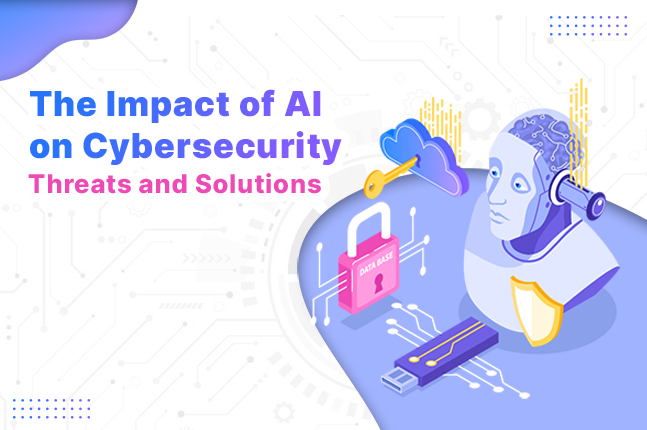
  • The Impact of AI on Cybersecurity – Threats and Solutions

    The Impact of AI on Cybersecurity – Threats and Solutions

    Artificial Intelligence (AI) is revolutionizing cybersecurity by enhancing the ability to detect, prevent, and respond to threats. With its unmatched power to analyze massive datasets in real-time and predict vulnerabilities, AI offers businesses a robust defense against increasingly sophisticated cyberattacks.

    While AI brings immense potential, it also introduces a unique set of complexities and challenges. Cybercriminals are also leveraging AI to launch automated attacks, create realistic phishing schemes, and bypass traditional security measures. Understanding this dual impact of AI is crucial for building resilient cybersecurity strategies.

    In this article, we’ll explore how AI is shaping the cybersecurity landscape, delving into its threats with AI, and actionable solutions for a safer digital future.

    Evolution of Cyber Threats with AI

    Incorporating AI into cybersecurity offers significant benefits but also poses notable risks. While it enhances defense mechanisms, it also empowers attackers with advanced tools to exploit vulnerabilities. Let’s explore how AI has transformed cyber threats.

    AI-Powered Cyberattacks

    AI enables cybercriminals to automate and enhance their malicious activities with unprecedented precision.

    • Automation of Vulnerability Scanning and Phishing: Attackers now use AI algorithms to identify weak points in systems faster than ever before. AI tools can also generate highly personalized phishing emails at scale, making them more convincing and harder to detect.
    • Development of Sophisticated Malware: With AI, malware is becoming adaptive and intelligent. It can analyze a system’s defenses, adjust its behavior in real-time, and evade detection by traditional antivirus software.

    Generative AI in Social Engineering

    Generative AI tools have significantly escalated the threat of social engineering.

    • Crafting Convincing Phishing Emails: AI can analyze user data to create highly targeted and believable phishing emails, increasing the likelihood of success.
    • Creation of Deepfake Content: AI-powered deepfakes can mimic voices, images, or videos of trusted individuals, enabling attackers to deceive victims with alarming ease.

    Advanced Persistent Threats (APTs)

    APTs are long-term, targeted attacks on organizations, and AI has made them even more formidable.

    • Enhancement of APT Capabilities: AI tools enable APT groups to conduct extensive reconnaissance, bypass security measures, and remain undetected for prolonged periods. By analyzing vast amounts of data, attackers can refine their strategies to maximize impact.

    AI-Driven Solutions Revolutionizing Cybersecurity

    AI is transforming cybersecurity by enabling faster and more accurate threat detection, response, and prevention. Its ability to process vast amounts of data in real-time and predict potential risks makes it a cornerstone of modern security strategies. Below are some of the most impactful AI-driven solutions, along with additional advancements shaping the future of cybersecurity.

    Threat Detection and Response

    Modern cyber threats are highly dynamic and often go unnoticed by traditional security tools. AI enhances the ability to detect these threats early and respond effectively. Let’s explore some of the most effective AI-driven methods for detecting and responding to these evolving threats.

    • Real-Time Anomaly Detection: AI-powered systems continuously monitor networks and systems to identify deviations from normal behavior. For example, unusual login attempts or unexpected data transfers are flagged for immediate investigation. This minimizes the time attackers have to exploit vulnerabilities and inflict harm.
    • Predictive Analytics: Using advanced machine learning models, AI analyzes historical attack patterns and real-time system data to predict where and how an attack might occur. For instance, if an organization’s system shows signs of vulnerability, AI suggests proactive measures to mitigate the risk before attackers exploit it.
    • Threat Intelligence Integration: AI consolidates and processes global threat intelligence feeds to provide actionable insights. By identifying new malware signatures, phishing campaigns, and vulnerabilities, it helps organizations prepare defenses against emerging threats.

    Behavioral Analysis

    Understanding the behavior of users, devices, and systems is a key element of modern cybersecurity. AI uses behavioral analysis to spot irregularities that may indicate a breach. To strengthen defenses further, AI leverages behavioral analysis to detect deviations in user, device, and system activities that could signal potential threats.

    • Monitoring User Behavior: AI tracks typical user activities, such as the devices they use, login times, and application usage. If an employee suddenly logs in from a foreign location or accesses sensitive data during odd hours, the system raises an alert. This proactive monitoring reduces the risk of data breaches caused by compromised accounts.
    • Device and Network Behavior: AI evaluates how devices communicate within the network and identifies unusual patterns. For instance, if a printer suddenly starts communicating with an external IP address, it could indicate a malware attack. AI alerts administrators before the activity escalates.

    Automated Incident Response

    Speed is critical when responding to cyber threats. AI-driven automation ensures swift action to minimize damage and maintain business continuity. Once a threat is identified, AI-driven automation ensures quick containment and resolution, minimizing potential damage and downtime.

    • Immediate Threat Containment: When a threat is detected, AI can automatically isolate affected systems or devices to prevent the spread of malware. For example, if ransomware is identified on a workstation, AI systems can disconnect it from the network, halting further encryption of files.
    • Automated Remediation: AI systems execute corrective actions without waiting for human intervention. This could include tasks like resetting compromised passwords, rolling back unauthorized changes, or quarantining suspicious emails. Such automation saves time and reduces the burden on cybersecurity teams.

    Challenges and Risks of AI in Cybersecurity

    While AI has revolutionized cybersecurity, it brings along challenges that require careful consideration. These challenges, if left unaddressed, could weaken the very systems they are meant to protect. Let’s explore the key challenges posed by AI in cybersecurity and understand their potential impact.

    Adversarial Attacks on AI Systems

    AI systems can be manipulated by cybercriminals through adversarial attacks, where malicious inputs deceive AI models into making incorrect decisions. For instance, attackers can craft data to make malware appear benign, bypassing detection systems. This manipulation weakens AI’s reliability in high-stakes scenarios.

    Additionally, poisoning attacks during the training phase can corrupt AI models by introducing faulty data. This not only reduces the accuracy of threat detection but also increases vulnerability to future attacks. Strengthening AI’s resistance to such tactics is critical to maintaining cybersecurity integrity.

    Data Privacy Concerns

    AI relies heavily on vast datasets, often including sensitive user information. This dependency raises significant privacy risks. If improperly secured, these datasets can become prime targets for cybercriminals, leading to large-scale breaches.

    Moreover, the misuse or mismanagement of data collected by AI systems can lead to violations of privacy regulations like GDPR. Balancing AI’s need for data with robust privacy safeguards is essential to ensure trust and compliance.

    Over-Reliance on AI

    While AI offers remarkable capabilities, over-reliance on it can create blind spots in cybersecurity strategies. Organizations that depend solely on AI risk neglecting the human intuition and contextual judgment essential for addressing complex threats.

    In scenarios where AI systems fail or are compromised, the lack of manual expertise can leave businesses unprepared to respond effectively. A balanced approach that combines AI with skilled human oversight ensures resilience and adaptability in the face of evolving threats.

    What is the Future of AI in Cybersecurity?

    The future of AI in cybersecurity is both promising complex and. As technology evolves, AI is set to play an even greater role in safeguarding digital ecosystems. However, this growth must be accompanied by ethical considerations and robust regulatory frameworks to ensure responsible use.

    Advancements in AI for Cybersecurity

    Emerging technologies like quantum computing and advanced machine learning algorithms are poised to revolutionize cybersecurity. These advancements will enable AI to predict and neutralize threats with unprecedented accuracy, making systems more resilient against even the most sophisticated attacks.

    Additionally, innovations such as AI-driven automation and adaptive learning models will streamline security operations. By automating routine tasks and continuously improving threat detection capabilities, AI will free up human experts to focus on strategic decision-making and critical responses.

    Regulatory and Ethical Considerations

    As AI becomes more integral to cybersecurity, the need for clear regulations and ethical guidelines is paramount. Policies governing AI use must address issues like data privacy, accountability, and transparency to ensure that these technologies are deployed responsibly.

    Moreover, ethical considerations will play a crucial role in balancing security needs with individual rights. Developing standards for AI’s decision-making processes and ensuring human oversight will be key to maintaining trust and fairness in cybersecurity practices.

    Collaboration Between AI and Human Expertise

    The future of cybersecurity lies in the synergy between AI tools and human expertise. While AI excels at processing large datasets and identifying patterns, human judgment remains essential for interpreting complex situations and making strategic decisions. This collaboration will ensure a balanced and effective approach to tackling cyber threats.

    AI’s Role in Cybersecurity Education and Training

    AI is not only a tool for defense but also a catalyst for enhancing cybersecurity education. Advanced AI-powered simulations can help train professionals to respond to real-world cyberattacks, improving their skills and readiness. As threats evolve, continuous learning facilitated by AI will be crucial to maintaining a skilled cybersecurity workforce.

    Conclusion

    AI has undeniably transformed the cybersecurity landscape, serving both as a powerful defense mechanism and a potential tool for attackers. Its ability to detect threats, predict vulnerabilities, and respond swiftly has made it indispensable in protecting digital ecosystems. However, the same technology can be exploited by malicious actors, highlighting the need for vigilance and robust defenses.

    To navigate this dual role effectively, a balanced approach is essential. AI should be leveraged to enhance cybersecurity operations, but it must be complemented by human expertise to provide context, judgment, and strategic oversight. Partnering with an experienced AI development company in USA can further amplify these efforts by ensuring tailored, ethical, and effective AI implementations. Together, this synergy can create a resilient framework capable of addressing both current and emerging cyber threats.

    As AI continues to evolve, businesses must invest in ethical implementations, continuous learning, and proactive measures to harness its potential responsibly. By striking this balance, organizations can stay ahead in the ever-evolving battle against cybercrime while fostering trust and innovation in the digital age.

  • AI in Healthcare: The Future of Diagnosis, Treatment, and Patient Care

    AI in Healthcare: The Future of Diagnosis, Treatment, and Patient Care

    Artificial intelligence (AI) is revolutionizing the healthcare industry, reshaping how care is delivered and outcomes are achieved. By leveraging advanced algorithms and data analytics, AI bridges the gap between human expertise and technological precision. From diagnosing diseases earlier than ever to crafting personalized treatment plans, its influence spans every corner of modern medicine.

    AI’s ability to process vast amounts of medical data allows healthcare professionals to make faster, more informed decisions. This leads to improved accuracy in diagnoses, reduced treatment costs, and enhanced patient care. For instance, AI-powered tools can analyze complex medical images in seconds, spotting anomalies that may elude even the most experienced practitioners.

    Beyond diagnostics, AI is enabling personalized medicine by tailoring treatments to individual patients. It’s also expediting drug discovery, cutting years off development timelines and offering hope for conditions previously deemed untreatable. Furthermore, AI-driven virtual health assistants and wearable technologies empower patients to actively manage their health, ensuring support anytime, anywhere.

    In a world where efficiency and precision can save lives, AI is not just a tool—it’s a partner in redefining healthcare for the better. Its transformative power holds the promise of creating a more accessible, effective, and patient-centric healthcare system.

    Use Cases of AI in Healthcare

    1. AI in Medical Diagnostics

    Early Disease Detection

    AI has transformed early disease detection, especially in identifying life-threatening illnesses like cancer. With its advanced pattern recognition capabilities, AI can analyze vast datasets, such as medical records and test results, to spot warning signs often overlooked in traditional diagnostics. For example, algorithms trained on diverse data sets can predict the onset of conditions like Alzheimer’s or diabetes years before symptoms manifest, enabling earlier interventions.

    Medical Imaging

    Medical imaging has become a significant beneficiary of AI’s precision. By interpreting X-rays, MRIs, and CT scans, AI-powered tools assist radiologists in identifying abnormalities quickly and accurately. These tools reduce diagnostic errors and enhance efficiency, especially in time-critical situations. For instance, AI systems can flag potential issues such as tumors or fractures, allowing specialists to focus on nuanced cases requiring their expertise.

    Case Study: AI Outperforming Doctors in Cancer Detection

    AI’s superiority in medical diagnostics was highlighted in a recent study where it detected prostate cancer with 84% accuracy—significantly higher than the 67% accuracy achieved by human doctors. This remarkable advancement not only underscores AI’s potential but also demonstrates how it can complement human expertise, ensuring more precise and reliable diagnoses.

    2. AI in Treatment Planning

    Personalized Medicine

    AI is at the forefront of personalized medicine, offering tailored treatment plans based on an individual’s genetic makeup, lifestyle, and medical history. This approach enables doctors to prescribe therapies that maximize effectiveness and minimize side effects. For instance, AI tools analyze genetic data to recommend targeted therapies for cancer patients, ensuring treatments are as specific and effective as possible.

    Drug Discovery

    The drug discovery process, traditionally taking years and billions of dollars, is now being accelerated by AI. Machine learning algorithms sift through vast datasets to identify potential drug compounds, predict their effectiveness, and simulate their interactions within the body. AI’s efficiency in this domain is helping to fast-track treatments for diseases like Alzheimer’s, cancer, and rare genetic disorders.

    Case Study: Discovering New Antibiotics

    AI recently identified a new class of antibiotics capable of combating drug-resistant bacteria—a breakthrough that could address one of the most pressing global health challenges. By analyzing thousands of chemical compounds in record time, AI provided researchers with valuable insights that would have otherwise taken decades to uncover. 

    3. AI in Patient Care

    Virtual Health Assistants

    AI-powered virtual health assistants have become indispensable tools in modern patient care. These chatbots and virtual agents provide 24/7 support, answering patient queries, scheduling appointments, and offering reminders for medication adherence. By reducing the need for routine in-person consultations, they free up medical professionals to focus on more critical tasks while ensuring patients receive timely assistance.

    Remote Monitoring

    Wearable devices equipped with AI-driven health monitoring capabilities allow continuous tracking of vital signs such as heart rate, blood pressure, and glucose levels. These devices alert patients and healthcare providers to potential health issues in real time, enabling proactive interventions. For instance, AI-integrated wearables can detect irregular heart rhythms, prompting immediate medical attention to prevent severe complications.

    Case Study: AI Physiotherapist ‘Kirsty’

    In Scotland, the AI physiotherapist ‘Kirsty’ has been instrumental in reducing NHS waiting times. By providing personalized physiotherapy advice and exercises, Kirsty enables patients to start rehabilitation sooner. This innovative application of AI showcases its potential to streamline healthcare delivery and improve patient outcomes.

    4. Ethical and Practical Considerations

    Data Privacy

    As AI systems handle vast amounts of sensitive patient data, ensuring confidentiality is paramount. Strict data encryption, secure storage protocols, and compliance with regulations like GDPR and HIPAA are essential to protect patient information and maintain trust in AI solutions.

    Algorithmic Bias

    Bias in AI algorithms can lead to unequal treatment outcomes, particularly for underrepresented groups. Addressing this requires diverse and representative datasets during AI training, along with regular auditing of algorithms to identify and mitigate potential biases.

    Regulatory Compliance

    The integration of AI in healthcare must navigate a complex legal landscape. Adhering to national and international regulations, ensuring clinical validation, and securing approvals from governing bodies are critical for the safe and effective deployment of AI technologies.

    5. Future Prospects of AI in Healthcare

    Predictive Analytics

    AI’s predictive capabilities are transforming healthcare by forecasting disease outbreaks, patient admissions, and resource requirements. By analyzing historical and real-time data, AI helps hospitals prepare for challenges, improving both efficiency and patient outcomes.

    Surgical Robotics

    AI-assisted robotic surgery is a groundbreaking advancement, enhancing precision and reducing recovery times. These systems provide surgeons with real-time insights, minimizing risks and improving the success rates of complex procedures.

    Global Health Impact

    AI has the potential to bridge healthcare accessibility gaps worldwide. In underserved regions, AI tools can deliver virtual consultations, translate medical information, and assist in diagnosing conditions, ensuring that quality care reaches those who need it most.

    Conclusion

    AI is revolutionizing healthcare, reshaping how diagnoses are made, treatments are planned, and patient care is delivered. From early disease detection to real-time health monitoring, its impact is both profound and far-reaching. AI has not only improved the precision and efficiency of medical processes but also empowered patients with tools to actively manage their health.

    The integration of AI in healthcare demonstrates the power of innovation to address some of the industry’s most pressing challenges, such as resource limitations, rising costs, and accessibility gaps. Many healthcare organizations are turning to top AI consulting companies to guide their AI implementation strategies, ensuring effective adoption and maximizing the benefits these technologies can offer.

    By enabling faster diagnoses, personalized treatments, and proactive care, AI is paving the way for a more patient-centric, efficient, and equitable healthcare system. However, the journey is just beginning. Embracing AI innovations is crucial for healthcare providers, policymakers, and patients to fully unlock its potential. As we continue to refine these technologies and address ethical considerations, AI will become an even stronger partner in delivering better outcomes and saving lives.

    The future of healthcare lies at the intersection of human expertise and AI-driven insights. Together, they promise to transform the industry into one that is smarter, more responsive, and truly designed around the needs of the patient. Let’s embrace this revolution to create a healthier world for all.

Design a site like this with WordPress.com
Get started